


You don’t have a confidence problem. You have a position problem.
You know the walk. Down the hall to the meeting where your idea is on the table. Into the conference room where you’re the least senior person at it. Onto the call where the decision gets made, with or without your voice in it.
You prepared. You know your material cold.
And somewhere between the door and your chair, you got smaller.
Not on purpose. That’s the part that stings. You walked in already braced to be taken less seriously, and your body agreed to those terms before you could object.
Here’s what we want you to see: shrinking isn’t a personality. It’s a position. And positions can be changed.
• • •
Watch two ballerinas do the same step
Same choreography. Same height, same line, same effort. Your eye slides right past one of them. The other one, you can’t look away from.
The difference has a name in ballet: épaulement (YouTube Shorts by Dance Masterclass, 2026). The angle of the shoulders and the carriage of the head that finishes a position. A dancer with épaulement isn’t taking up more space than the dancer next to her. She’s placed. Complete. Nothing about her is asking the audience for permission to be there.
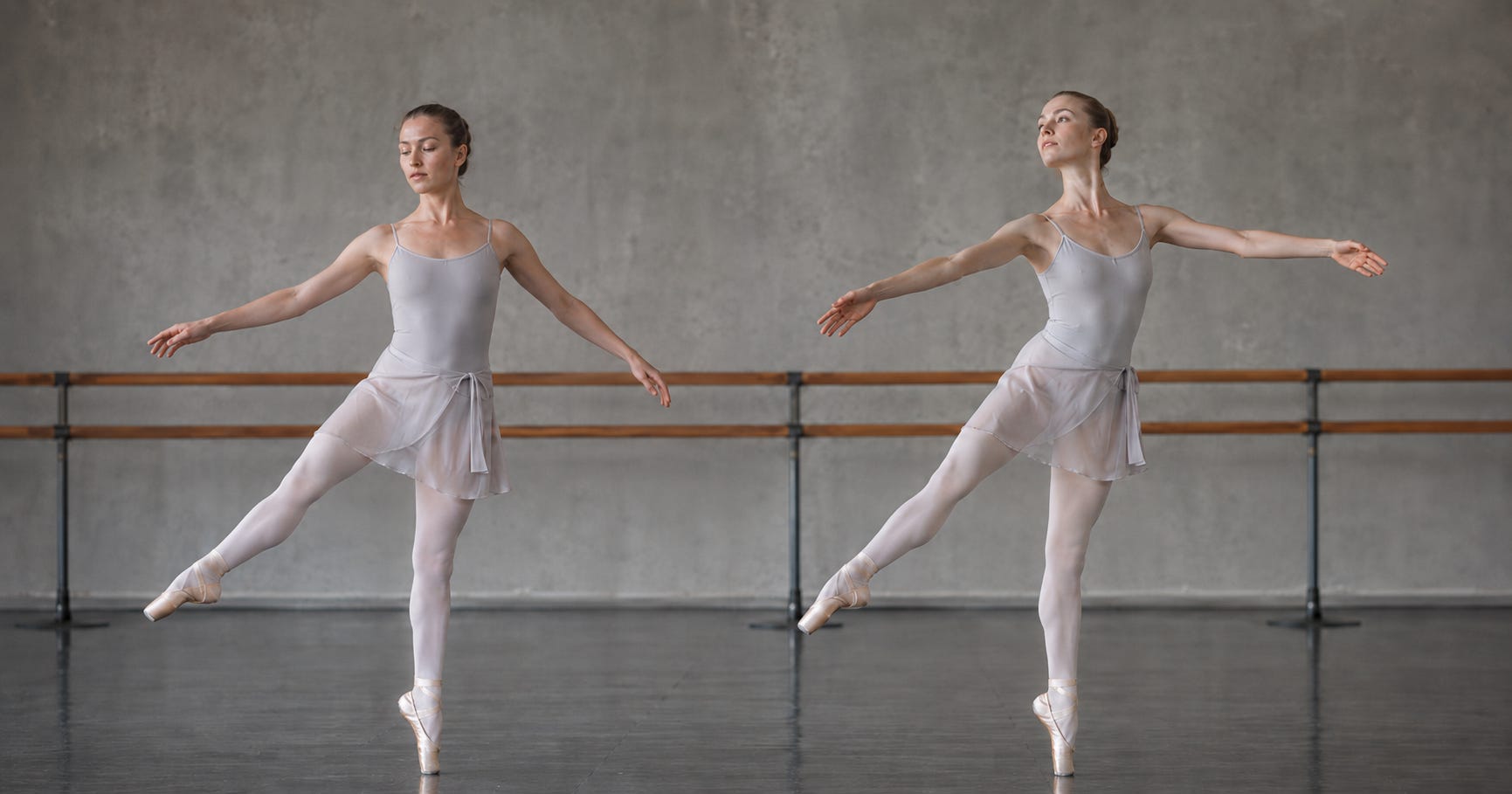
An unfinished position fades. A finished one lands.
That’s the whole secret of commanding a room, and almost nobody will say it to you plainly: presence isn’t size. It’s placement. You don’t need to become someone bigger. You need to finish the position you’re already in.
But first, you have to catch yourself unfinishing it.
The three tells that read as small
The fold.
Shoulders curl forward, chin drops, arms pull in. You’re offering the room your smallest surface, the way a body does when it expects impact. People read it in under a second, before you’ve said a word.
The permission scan.
Your eyes sweep the faces at the table, checking for a signal that it’s safe to speak. Scanning asks. And a room full of busy people will let you keep asking forever.
The runway.
“Sorry, really quickly, this might be off base, but um...” 10 words of apology before word one of your actual point. You built the case against yourself and presented it first.
None of this means something is wrong with you. It means your body is running an old protection pattern in a room where protection reads as smallness.
And it’s not cosmetic. In a randomized trial at the University of Auckland, Shwetha Nair and colleagues taped people into either an upright or a slumped posture, then put them through a stressful speech task. The upright group reported higher self-esteem, better mood, and less fear, and they spoke more. Same task. Same pressure. Different position, different outcome.
Position changes what pressure does to you.
So, here’s the part almost nobody teaches you: the fix isn’t something you do at the table. It’s something you do in the hallway, at the door, or in the 90 seconds before anyone in that room has seen you.
Below the line: the 4-move Pre-Room Presence Protocol, the 90-second threshold reset, the Command Sequence template, and the fixes for the three ways it falls apart mid-meeting.
