

You’ve read that one sentence more times than you’ve read anything else this week.
It was two lines in an email. Or six seconds in a meeting. Or one comment under your best work. Or a thing your teacher said in the mirror, in front of everybody.
It’s 9:00 pm now and you’re still holding it.
The three-day spiral, and why it runs on schedule
It goes the same way every time.
The sting. Your chest tightens before your brain finishes reading. That part’s fast, it’s physical, and you didn’t choose it.
The replay. You run it back. You add the thing you should have said. You start wondering who else in that room already agreed with her.
The shrink. You go quieter. You send the safer version. You keep the idea to yourself that you’d have offered on Monday without thinking twice.
Roughly three days, start to finish.
And the sting is the cheap part.
The sting costs you an afternoon. The shrink costs you range.
Why criticism knocks capable women sideways
You’ve probably been told you’re too sensitive about this. The research points somewhere else.
In 1996, Avraham Kluger and Angelo DeNisi published a meta-analysis in Psychological Bulletin. They pooled 607 effect sizes across more than 23,000 observations to ask whether feedback improves performance.
On average, it did. In over a third of cases, it made performance worse.
That number’s interesting. Their explanation is useful.
Feedback works when attention stays on the task. Its effectiveness drops as attention climbs away from the task and toward the self. Same words, different landing place, opposite result.
So, when your manager says the deck buried the recommendation, that sentence has two places it can go.
It can go to the deck.
It can go to you.
The spiral is what happens when it goes to you.
A while back we wrote about the room where you get handed nothing at all, and your brain writes a story to fill the silence. This is its twin. Here you got real information, and your brain built something much larger on top of it.

What every dancer learns in the first month
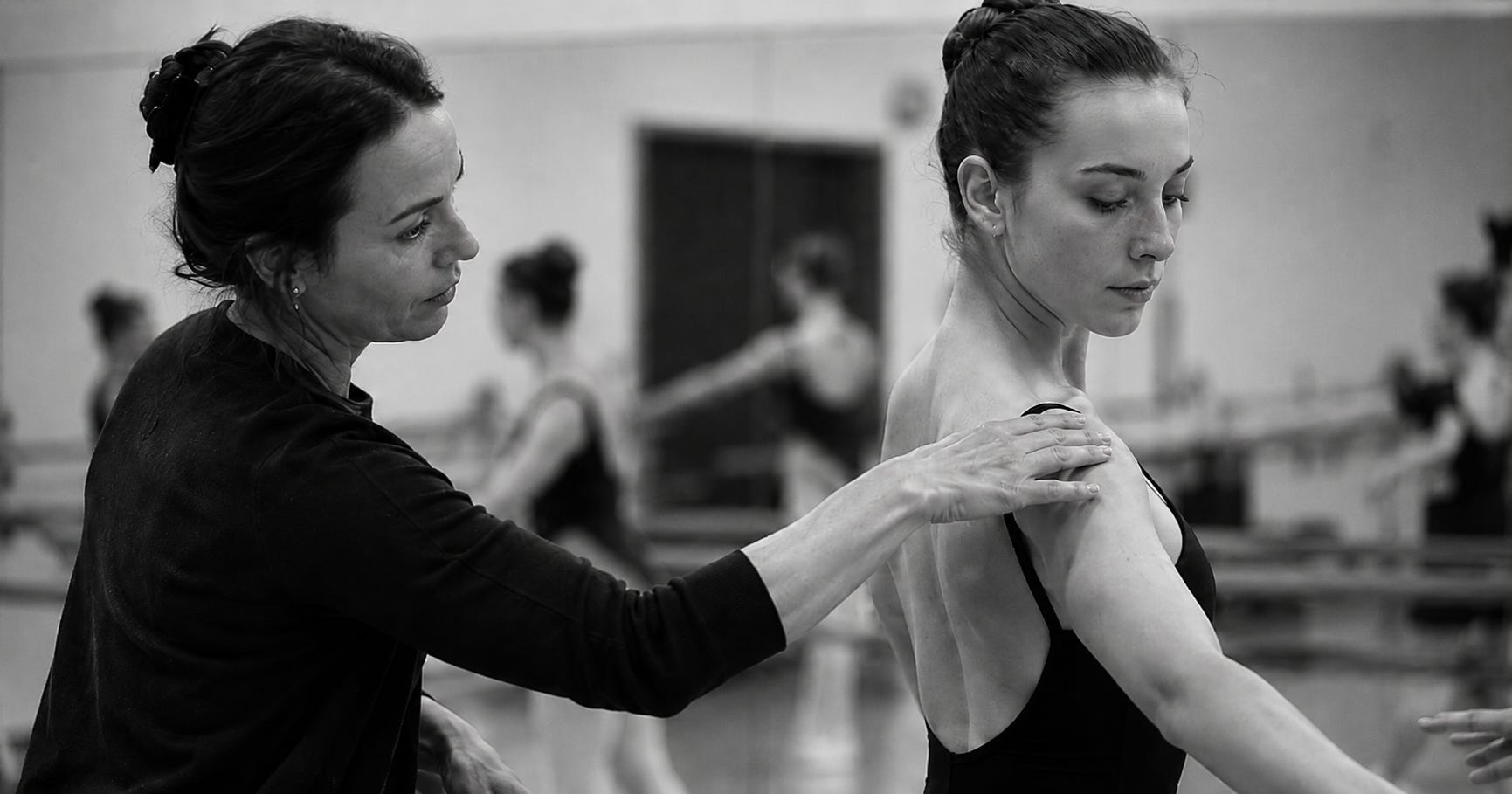
In a ballet class, the teacher walks the room while you dance and hands out corrections. Drop the shoulder. Point your whole leg. Your fifth is sloppy.
They land fast, in front of everybody, with nothing soft around them.
Here’s the part that takes beginners about a year to absorb. You say thank you, and you apply it in the next combination.
That’s the whole etiquette. No explaining. No apologizing. No spending the rest of class deciding what the teacher thinks of you as a person.
Because the correction was given to your shoulder.
Now the part nobody warns you about. The dancer who stops getting corrections is the one the teacher has quietly stopped investing in.
In that room, silence is the bad news.
A correction is proof that somebody still thinks you can do it.
Take the hit and keep your footing
We can’t stop the sting. It’s faster than you are, and it’ll be there next time too.
The work happens at the replay. That’s where the three days get decided, and it’s the one stage you have real leverage on.
So, we run a protocol. Three moves, in this order.
Separate the data from the verdict. Every piece of criticism arrives as two things fused together. You pull them apart on paper, because you can’t do it in your head at 9pm.
The 24-hour rule. What you’re allowed to do with it, and which seat you watch it from, before you respond to anything.
Extract and discard. Four questions that leave you holding one usable adjustment, and nothing else.
Skip all this and the sentence doesn’t leave. It joins the others in the pile, and the pile is what slowly convinces a capable woman to stop putting her hand up.
Below the line, we hand you the full correction protocol, the questions in the order that keeps you at the task, and the card that turns any criticism into one adjustment you can make this week.
