

Barre note: You don’t need an hour. You need one tendu.
5 6 7 8
Happy Tuesday!
Welcome to Issue #030, our World Ballet Day issue. This Thursday, October 29, ballet companies around the world open their studios online. Why not try your first tendu with them? We’re celebrating with everyone who loves ballet or has ever wanted to try it. Whether you danced at eight, dance now, or have always wanted to, you belong here. 💕 Pull up a spot at the barre.
New here? Every Tuesday we bring you one idea from neuroscience, embodiment, psychology or ballet, one thing to try the same day, and the study linked so you can check our work. It’s for women who dance, danced, or always wanted to, and who carry a lot: in the studio, at work, in your business and at home. You don’t need to have danced a step for any of this to work.
Today’s counts
The Lead: is it too late to start ballet as an adult? An honest answer, what class costs, and how to start small.
Center: the “too late” voice, and a 60-second way to answer it.
Embodied: a 10-minute kitchen-counter barre. Your first class can start at home.
From the barre: what a modern-dance pioneer believed about practice.
Ballet word of the day: Tendu
French for “stretched.” Your working foot slides out along the floor until only your toes touch, both knees straight, then slides back home. It usually comes early at the barre.
Pirouette puzzle: My heels touch, my feet form one line, and a tendu can leave me and come back. I’m the first of five. What am I? (Answer in Curtain Call.)
Brain Notes
The research behind today’s issue, straight from the source:
◆ Adults keep learning new moves. A 2008 review of motor-learning studies in older adults. Read the review
◆ Dancing and the aging brain. A 2017 US randomized trial of adults aged 60 to 79. Read the study
◆ Who takes adult ballet? A small, informal 2015 survey of adult ballet students in New Zealand (not peer-reviewed). Read the survey
◆ Short sessions count. The US Physical Activity Guidelines dropped their old 10-minute minimum. Read the guidelines
◆ Want five still points, not one? Our guide, Find your still point: five ballet practices for when your mind won’t stop spinning, each under 2 minutes. Get the guide
THE LEAD · BALLET-INSPIRED PRINCIPLES
Is It Too Late to Start Ballet? What Adult Beginners Should Know
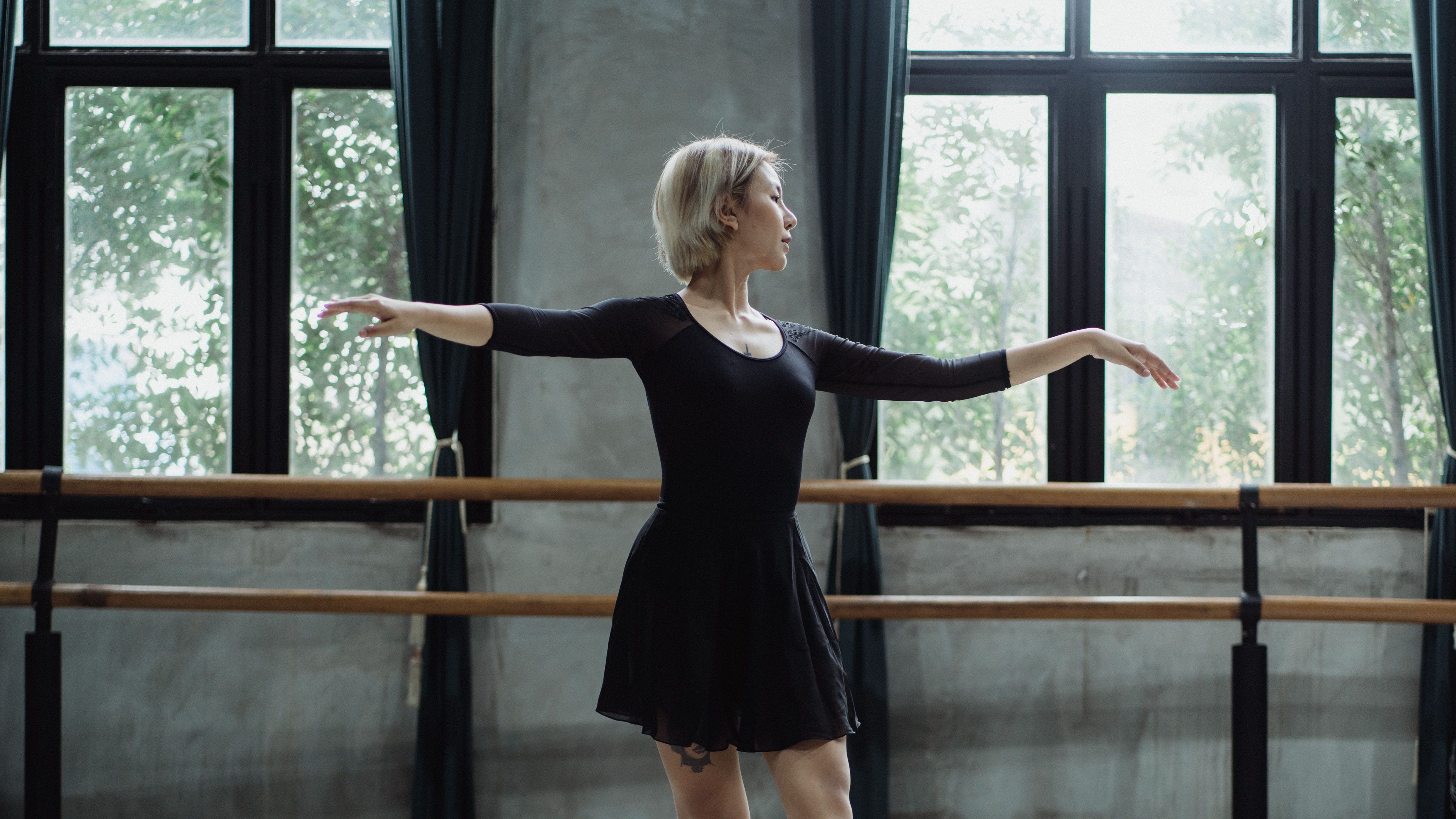
Maybe you danced as a girl and stopped. Maybe you never got the chance. Either way, the question is the same: is it too late?
For a professional career, that’s a fair question. For fitness, joy and growing as a person, our honest answer is no. Here’s why, and how to start small.
1. Know which question you’re asking.
Professional training can start very young. The School of American Ballet, the official school of New York City Ballet, enrolls children from age 6 in its September-to-June training program, and its 11- to 13-year-olds take class up to five or six days a week. It looks for applicants “young enough to derive the maximum benefit from their training.” (SAB admissions · SAB auditions) That’s the road to a company contract. It isn’t the only reason to take class.
2. Know that adults keep learning.
A 2008 review looked at many studies on how older adults learn new movement. It found that adults keep the ability to learn, though gains can be smaller on complex skills, and none of the studies were about ballet. (the review) A newer US study points the same way. In 2017, researchers followed 174 healthy adults aged 60 to 79 for six months. The group that learned new social dance routines (not ballet) showed signs of healthier white matter in one small brain area on scans, while the other groups declined. It’s one study, and it doesn’t prove dance protects the brain. (the study)
3. Find your reason. You won’t be the only one.
In a small, informal 2015 survey of 35 students in New Zealand adult ballet classes (published by the national dance organization DANZ, not a peer-reviewed study), most were in their 40s and 50s, and 1 in 5 had never done ballet before. Physical and mental health were the most common reasons for joining. More than half hoped for a new social life, and nearly half wanted mental stimulation or a challenge. One participant said, “It makes my day feel better – I leave feeling good.” (DANZ)
4. Let short sessions count.
You don’t need a 90-minute class to begin. The US Physical Activity Guidelines used to say activity had to last 10 minutes to count. The 2018 edition dropped that rule, and its summary says, “Even 5 minutes of physical activity has real health benefits.” (HHS, pp. 11 and 23) A gentle counter barre may not raise your heart rate much. Today’s goal is the habit.
5. Do the cost and time math, then start small.
Cost: BalletClasses.org, a US studio directory, puts the national median at about $30 a class, based on studios that publish a drop-in price, and nearly 1 in 4 listed US ballet schools offer a trial class. (BalletClasses.org)
Time: one class a week, plus 10 minutes at the counter between classes.
Where to begin: a class for true beginners. Pacific Northwest Ballet School tells newcomers, “If you have never taken a dance class before, we recommend starting with one of our eight- or nine-week fundamentals series.” (PNB) San Francisco Ballet School runs adult classes “for all levels from absolute beginner to advanced,” with no audition or previous experience required. (SF Ballet)
Try this today
Find your barre: a counter or a sturdy chair back. Stand tall.
Do 8 slow tendus to the front with each foot. Toes stay on the floor.
Look up one “absolute beginner” or “fundamentals” class near you, and ask about a trial class.
Carry it over
In the studio: thinking about going back? Book one class, not a whole term.
At work: a career change at 45 starts the same way: one small skill, practiced often.
In your business: a new skill at any stage starts with one beginner lesson.
At home: a 10-minute counter barre after the house goes quiet.
Key takeaways
For fitness, joy and growth, it isn’t too late. A professional career is a different question.
Adults keep the ability to learn new movement. Gains can be smaller on complex skills.
Short sessions count. Start with 10 minutes and one beginner class.
Look for “absolute beginner” or “fundamentals,” and ask about a trial class.
CENTER · PSYCHOLOGY
The “too late” voice
Before you go back to class, a voice might say: you’re too old, too stiff, too far behind. It sounds like a fact. It’s a forecast.
Here’s a way to answer it. Write the sentence down: “I’m too old for ballet.” Then rewrite it as a question you can actually test: “What can I learn in the next 10 minutes?” Do one tendu. Now you have data, not a forecast.
Your exercise: forecast vs data (60 seconds)
Write down one “too late” thought. Under it, write one small thing you did today anyway. Read the second line out loud.
EMBODIED
Your 10-minute kitchen-counter barre
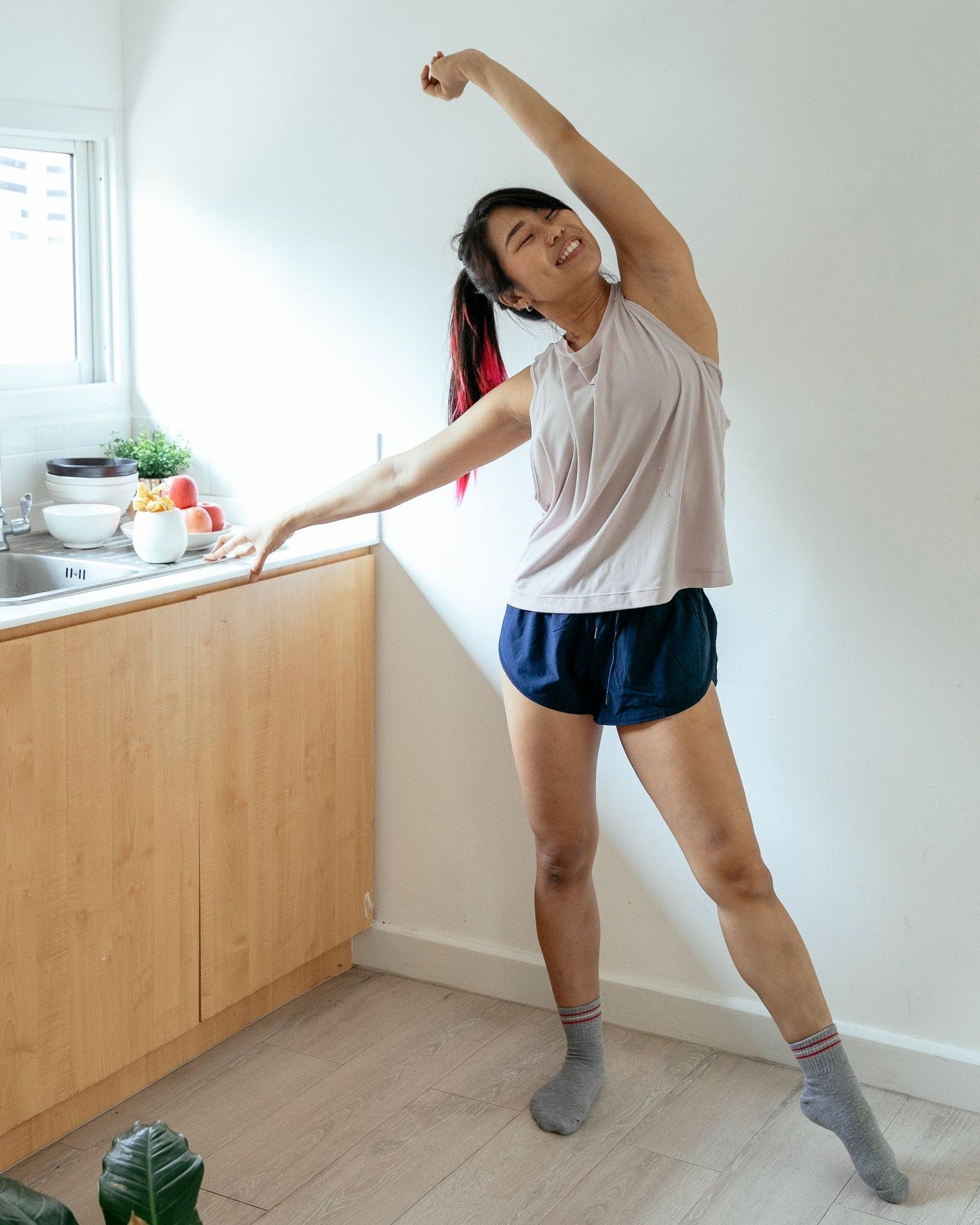
Ten minutes for your body + brain, and no studio needed. A counter, a chair back or a sturdy windowsill is your barre. If your floor is slippery, skip the socks.
Stand tall (1 minute). One hand light on the counter, feet together or in a small V. Shoulders down. Breathe.
Tendus front (2 minutes). Slide your outside foot forward until only your toes touch, knees straight, then slide it home. 8 slow ones, then turn around for the other foot.
Tendus side (2 minutes). Same, out to the side. 8 with each foot.
Tendus back (2 minutes). Same, behind you. Keep it small, hips facing front. 8 with each foot.
One more round (2 minutes). Front, side and back, a little quicker, only if it feels good.
Come home (1 minute). Feet together, three slow breaths. Name one thing that went fine.
Keep it gentle. Stop if anything hurts or you feel dizzy, and check with your doctor or physical therapist first if your feet, ankles, knees, hips or balance need extra care.
Ballet-Inspired Principle of the Week
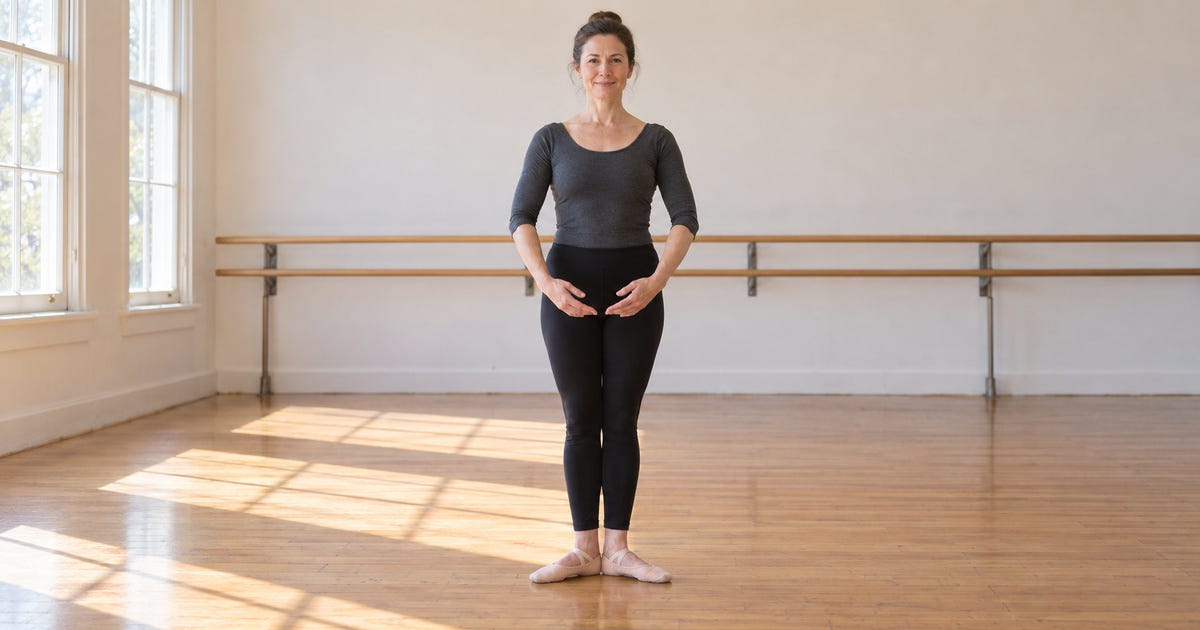
Come back to first.
In ballet, first position is a simple place to start: in American Ballet Theatre’s words, “the feet form one line, heels touching one another.” For a beginner, that means turning the toes out only as far as is comfortable. A tendu can slide out from first and slide back to it. Leaving and coming back is the step. Starting ballet as an adult works the same way. You’ll miss a class, lose a week, or feel behind, and none of that undoes anything. You just come back to first and take the next tendu. (ABT Ballet Dictionary)
This week: pick your “first,” a time and a place for your 10-minute barre (or a walk, or a stretch). Go back to it at least three times. More ballet-inspired principles →
From the Barre
Around 1953, the radio series This I Believe aired a short essay by Martha Graham, the choreographer and modern-dance pioneer. Her first line: “I believe that we learn by practice.” (NPR archive)
We love that line for anyone who thinks she started too late. You can begin practicing on any ordinary Tuesday.
She also wrote: “Practice is a means of inviting the perfection desired.” Not demanding it. Inviting it. Ten minutes at the counter counts as an invitation.
Quick answers:
Is it too late to start ballet as an adult?
Not for fitness, joy or learning. A 2008 review of motor-learning research suggests adults keep the ability to learn new movement skills, though gains can be smaller on complex tasks. It included no ballet studies. A professional career is a different question: the School of American Ballet’s September-to-June training program enrolls children from age 6.
Is 30 too old to start ballet?
No, not for taking class. Company schools run adult classes for complete beginners. San Francisco Ballet School has an Absolute Beginner Ballet Boot Camp “for adults who are new to ballet,” and Pacific Northwest Ballet School’s Fundamentals I “is designed for absolute beginners.”
Is it okay to start ballet at 40?
Yes. In a small, informal 2015 survey of 35 students in New Zealand adult ballet classes (published by the national dance organization DANZ, not a peer-reviewed study), most were in their 40s and 50s, and 1 in 5 had never done ballet before. It’s one small survey, not a census.
Can you start ballet as an adult?
Yes. In BalletClasses.org’s US directory, at least 1 in 5 ballet schools list adult ballet classes. Look for “absolute beginner” or “fundamentals,” and read the description: some “beginner” classes expect earlier ballet experience. Pacific Northwest Ballet School’s Beginner level does.
Is adult ballet hard?
It’s challenging, especially at first. The US Physical Activity Guidelines note that ballet requires more flexibility than some activities. Beginner classes take it slowly: San Francisco Ballet School says instruction in its boot camp is “broken down to the core elements and then built upon each week.”
How do I start ballet as an adult?
Start small. Pick an absolute-beginner or fundamentals class, ask about a trial class, and wear something you can move in (check the studio’s dress code). Between classes, try a 10-minute barre at your kitchen counter. One class a week is a real start.
How much are adult ballet classes?
BalletClasses.org, a US studio directory, puts the national median at about $30 a class, based on studios that publish a drop-in price. A single adult class is $20 at Pacific Northwest Ballet School and $23 at San Francisco Ballet School (checked October 12, 2026).
Curtain Call
Your story could go here. Changed a pattern, went back to class after 20 years, finally booked the trial? Tell us in a few lines and we may share it, with your OK. Send us your story →
This week’s ballet to watch: a real company class. This Thursday, October 29, is World Ballet Day, and the Royal Ballet’s livestream opens at 7:30 AM ET (11:30 in London) with the company’s daily class, live from the Royal Opera House. Watch how a professional company starts its day. Royal Ballet and Opera
Pirouette puzzle answer: first position. See why →
Coming soon: PRIMA
We’re building PRIMA, an AI companion for performance and life’s big moments, and a guided reflection practice. It’s for the moments that ask a lot of you, in the studio, at work, in your business and at home. It’s an AI companion, not therapy. Waitlist members get first access.
Hit reply and tell us what landed. We read every note.
See you at the barre,
The Ballerina Hustler team
P.S. Know someone who thinks she’s too old for ballet? Forward this to her. She can subscribe here.
Ballerina Hustler™ is a weekly newsletter on neuroscience, embodiment, psychology and ballet-inspired principles. The science in this issue comes from peer-reviewed research, listed in the sources below. This is education, not medical advice, diagnosis or therapy. For clinical concerns, please see a qualified healthcare provider. If you’re in crisis in the United States, call or text 988.
Sources cited in this issue
Voelcker-Rehage C (2008). Motor-skill learning in older adults. European Review of Aging and Physical Activity.
Burzynska AZ et al. (2017). Dance intervention improved integrity of the fornix of older adults. Frontiers in Aging Neuroscience.
US Dept. of Health and Human Services (2018). Physical Activity Guidelines for Americans, 2nd ed.
Kopytko T (2015). The growth of adult’s ballet. DANZ, informal survey.
Graham M (c. 1953). An Athlete of God. This I Believe, NPR.
I think being bad at something new might actually be one of the freedoms of getting older. There’s less time to waste pretending we already know how to do everything.
I love this and you reminded me how much I loved ballet as a kid and I keep wondering why I stopped- this makes me think it’s time to start again💕