

Barre note: The answer didn’t leave. Pressure just crowded the room.
5 6 7 8
Happy Tuesday!
Welcome to Issue #028. Whether you danced at eight, dance now, have always wanted to, or simply love watching from the audience, you belong here. 💕 Pull up a spot at the barre.
New here? Every Tuesday we bring you one idea from neuroscience, embodiment, psychology or ballet, one thing to try the same day, and the study linked so you can check our work. It’s for you if you carry a lot: in the studio, at work, in your business and at home. You don’t need to have danced a step to try any of this.
Today’s counts
The Lead: why your mind goes blank under pressure, and why it isn’t about how much you know.
Embodied: a 2-minute reset before you walk in, plus a 20-second version for the moment it happens.
Principle: Find the next count (what dancers do when they blank on stage).
Ballet word of the day: Marking
Walking the choreography at half effort so the sequence sticks before you dance it full out. Less sweat, more memory. More on marking →
Pirouette puzzle: When I forget the steps, I don’t stop. I keep moving with the music until I find the next number. What am I looking for? (Answer in Curtain Call.
Brain Notes
The studies behind today’s issue, straight from the source:
◆ Pressure hits the high-capacity people hardest. Beilock & Carr (2005) on working memory and choking under pressure. PubMed
◆ Practice-testing protected recall under stress in a lab study. Smith, Floerke & Thomas (2016) in Science. PubMed
◆ Dancers who marked performed the routine better. Warburton et al. (2013) on marking vs full-out rehearsal. PubMed
◆ Say “I’m excited,” not “calm down.” Brooks (2014) on reframing pre-performance nerves. PubMed
◆ Exhale-focused “cyclic sighing” improved mood. Balban et al. (2023) in Cell Reports Medicine. PubMed
THE LEAD · NEUROSCIENCE

Why Your Mind Goes Blank Under Pressure at Work (and How to Get Your Words Back)
Tuesday, 10:00 AM. Someone asks for thoughts on the Q3 numbers. Your name gets called. You know this. You’ve lived this. And then: white noise. The answer arrives in the elevator, word-perfect and five minutes too late.
You’re not slow. You’re not unprepared. Your brain just lost the access code for a moment.
Quick answer: Your mind goes blank under pressure because worry about how you’re coming across takes up the same small mental workspace (working memory) you need to pull up the answer. The knowledge is still there, just harder to reach, which is why it comes back after the meeting. Pause, exhale slowly, plant your feet, and say one true sentence.
1. The answer didn’t leave. Your workspace got crowded.
Working memory is a small whiteboard. Under pressure, part of it fills with “How do I sound? Are they judging me?” That crowding leaves less room to pull up what you already know.
Here’s the flip that makes this shareable: pressure tends to hurt the people best equipped to answer. In a 2005 lab study of math problems, Beilock and Carr found that only people high in working memory were harmed by pressure, and only on the hardest problems (Beilock & Carr, 2005). Plain version: blanking doesn’t mean you don’t know it. Pressure can eat into the very mental space strong performers rely on.
(If your brain also starts writing a story about their faces while you’re blank, this free essay is for that.)
2. Why it comes back the second you sit down
Once the spotlight moves, the pressure eases and there’s more room on the whiteboard again. If the answer comes back then, that’s a good sign the knowledge was there. Often, blanking in the room and remembering in the hallway is a problem of reaching the answer under pressure, not of not knowing it (see Beilock & Carr, 2005, on pressure using up working memory).
3. Freeze under pressure at work? Your body is braking, not breaking.
Being put on the spot can set off a brief “hold still” brake. Roelofs (2017), in a scientific review, describes freezing as a brake on movement that prepares action, not a passive collapse. One short line, then move on. For the five body tells before a freeze, and three moves back, see the Front Row field guide: 5 Signs You’re About to Freeze.
4. Train access, not more knowledge
Most prep advice says “prepare harder.” Better advice: prepare differently.
Say it out loud, don’t reread it. In a lab study by Smith, Floerke and Thomas (2016), people who learned word and picture lists by practice-testing themselves remembered just as well after a stressful task. People who only restudied remembered less under stress.
Mark it. The night before, say your opener and your two key points at half volume. In a study of dancers, marking choreography led to better performance of the routine than rehearsing it full out (Warburton et al., 2013). Marking in the principles archive →
Practice with a little pressure. In a sports study, expert basketball and darts players who practiced under anxiety-raising conditions kept their performance steady in a later high-anxiety test, while those who practiced without it did not (Oudejans & Pijpers, 2009). At work, that looks like a colleague firing one surprise question at you before the real meeting.
5. When it happens anyway: find the next count
You don’t need the whole answer back. You need the next sentence. Use a bridge line, take one slow exhale, press your feet into the floor, and lead with the headline.
Three lines that sound like a human, not a script:
“Good question. Give me a second.”
“Let me make sure I’m answering the right thing: you’re asking about…”
“Here’s my headline, and I’ll send the detail after.”
(If the freeze is about finishing a task, not answering a question, use the 60-second Finish Line Freeze reset instead.)
Key takeaways
Blank ≠ not knowing. The knowledge stayed. Access got crowded.
In research, pressure hit high-working-memory people hardest on hard problems.
Train out loud. Mark your opener. Practice with a little pressure.
In the moment, find the next count: one true sentence.
This is education, not medical advice, diagnosis or therapy.
If going blank comes with things that feel heavier than meeting nerves, The Match can point you to a licensed pro.
Subscribe free → Every Tuesday: one idea, one practice, the study linked.
EMBODIED
Your 2-Minute Reset (before the room) + the 20-second version (in the room)
Before you walk in (about 2 minutes)
Dump it (45 sec). Write the worry in a few lines. Inspired by Ramirez & Beilock (2011), where students wrote for 10 minutes before an exam. This is a short version of the idea, not what was tested.
Plant and pull up (30 sec). Feet flat, lift from your center, then 2 cyclic sighs. How to do a cyclic sigh is in last week’s free essay. Honest note: the Stanford study (Balban et al., 2023) tested 5 minutes of cyclic sighing a day for a month and found better mood and slower breathing than with mindfulness meditation. It didn’t test performance or a couple of sighs, so treat this as a steadying habit, not the studied dose.
Say “I’m excited” (10 sec). I was telling myself “I’m excited” before the moments that matter long before I knew there was research behind it. Early research suggests it helps. Brooks (2014): in experiments with singing, public speaking and a math test, people who reframed nerves as excitement performed better than people who tried to calm down.
Mark your opener (35 sec). Say your first sentence and two points out loud at half volume.
In the room (about 20 seconds)
Pause and say a bridge line.
One slow exhale. Press your feet into the floor.
Rest your eyes on one point (your notes, a pen). That’s spotting.
Say one true sentence: the headline first.
Keep it gentle. Stop if anything feels off.
Carry it over
In the studio: you forgot the combination. Keep moving. Find the next count.
At work: the question in the meeting. Bridge line, then the headline.
In your business: the investor or client question you weren’t ready for.
At home: the “so what do you do?” at a party.
Want the full field guide for catching a freeze before it catches you, plus How to Command a Room in 90 Seconds? Those live in Front Row ($10/month or $80/year), along with the Monthly NEPP Protocol and replies to any essay.
Ballet-Inspired Principle of the Week: Find the next count
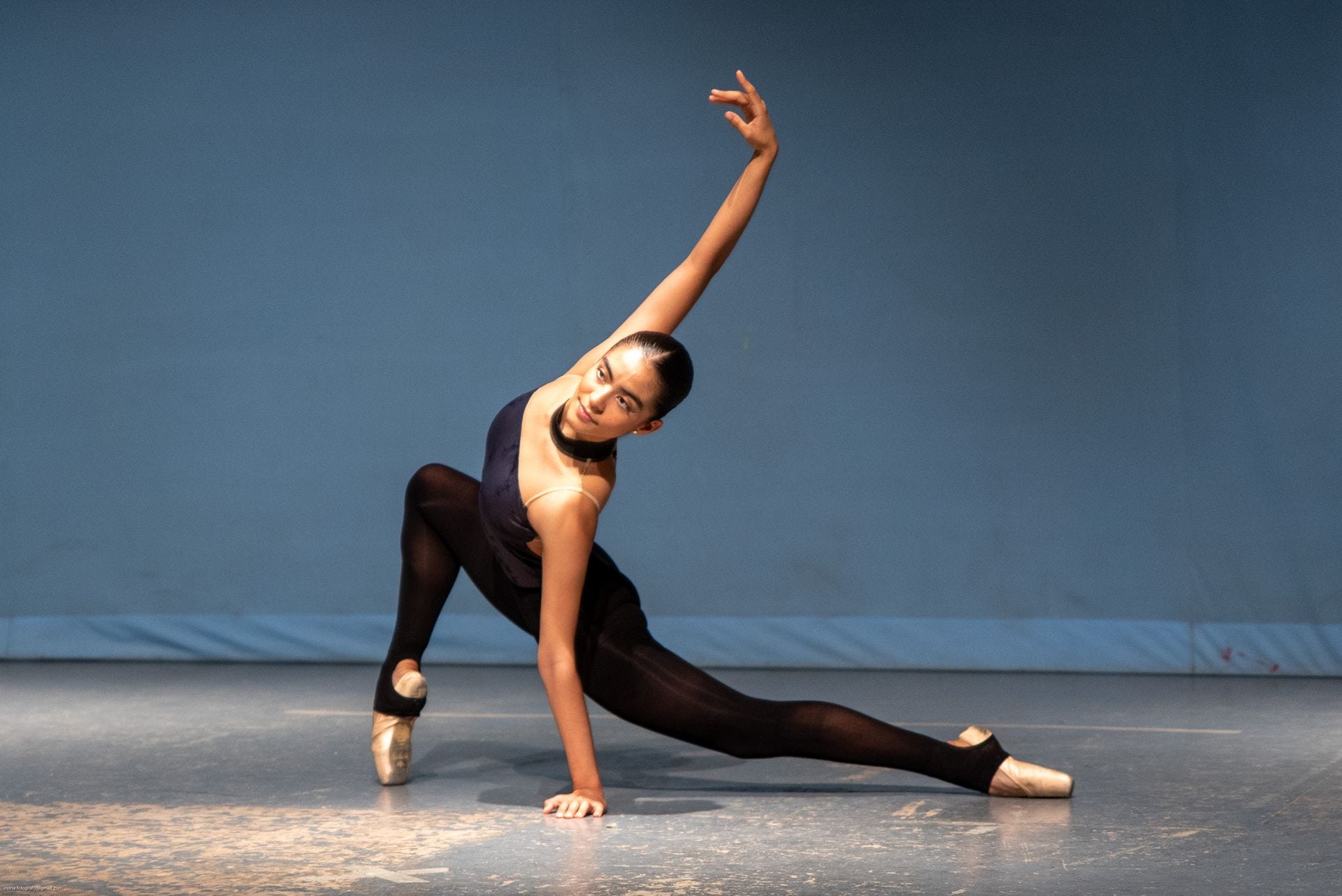
When a dancer blanks on stage, the rule is never stop. Keep moving with the music, find the next count, rejoin the phrase. In our experience, a missed step is easy to miss from the audience. A dancer who stops is not.
Off stage: you don’t need the whole answer back. You need the next sentence.
This week: in one meeting, answer one question headline-first, before you feel ready.
More ballet-inspired principles → ballerinahustler.com/principles
Quick answers
Why does my mind go blank when someone asks me a question?
Worry about how you’re coming across crowds the same small workspace you need to pull up the answer. The knowledge is still there. Pause, exhale, then start with one true sentence.
Why does my mind go blank when I’m put on the spot?
Being singled out with no warning is the pressure, and pressure crowds the workspace you need to recall the answer (Beilock & Carr, 2005). Use a bridge line (”Good question, give me a second”) to buy two seconds, then lead with the headline.
Does going blank mean I didn’t prepare enough?
Not necessarily. In research, pressure tended to hit the people using the most working memory hardest (Beilock & Carr, 2005). Prepare differently: practice out loud, mark your opener, and rehearse with one surprise question.
Why do I remember the answer right after the meeting?
Once the spotlight moves, the pressure eases and the workspace has more room. If the answer comes back, that’s a good sign the knowledge was there. Blanking is often an access problem, not a knowing problem.
How do I stop freezing in meetings?
Before: mark your opener out loud and practice with a surprise question. In the moment: bridge line, one slow exhale, feet on the floor, then one headline sentence. Reps make it easier. Nothing “stops it forever.”
Why am I fine in casual conversation but freeze in important moments?
Stakes add the “how am I doing?” load that casual talk doesn’t have. Research suggests that load crowds working memory (Beilock & Carr, 2005). Practicing with a little pressure helps the skill carry over (sports finding: Oudejans & Pijpers, 2009).
Curtain Call
Ever blanked on stage or in a meeting and found your way back? Tell us in a few lines and we may share it, with your OK. Send us your story →
Pirouette puzzle answer: the next count. See why in the Ballet-Inspired Principle above.
What should we find for you? One tap. We’re building this next, and you decide what comes first.
See you at the barre,
The Ballerina Hustler team
P.S. Know someone whose mind goes blank when it matters most? Forward this to her. She can get the free newsletter here.
Ballerina Hustler™ is a weekly newsletter on neuroscience, embodiment, psychology and ballet-inspired principles. The science in this issue comes from peer-reviewed research, listed in the sources below. This is education, not medical advice, diagnosis or therapy. For clinical concerns, please see a qualified healthcare provider. If you’re in crisis in the United States, call or text 988.
Sources cited in this issue
Beilock SL, Carr TH (2005). When high-powered people fail: Working memory and “choking under pressure” in math. Psychological Science, 16(2), 101–105. PubMed
Smith AM, Floerke VA, Thomas AK (2016). Retrieval practice protects memory against acute stress. Science, 354(6315), 1046–1048. PubMed
Warburton EC, Wilson M, Lynch M, Cuykendall S (2013). The cognitive benefits of movement reduction: Evidence from dance marking. Psychological Science, 24(9), 1732–1739. PubMed
Oudejans RRD, Pijpers JR (2009). Training with anxiety has a positive effect on expert perceptual–motor performance under pressure. Quarterly Journal of Experimental Psychology, 62(8), 1631–1647. PubMed
Brooks AW (2014). Get excited: Reappraising pre-performance anxiety as excitement. Journal of Experimental Psychology: General, 143(3), 1144–1158. PubMed
Ramirez G, Beilock SL (2011). Writing about testing worries boosts exam performance in the classroom. Science, 331(6014), 211–213. PubMed
Balban MY, Neri E, Kogon MM, Weed L, Nouriani B, Jo B, Holl G, Zeitzer JM, Spiegel D, Huberman AD (2023). Brief structured respiration practices enhance mood and reduce physiological arousal. Cell Reports Medicine, 4(1), 100895. PubMed
Roelofs K (2017). Freeze for action: neurobiological mechanisms in animal and human freezing. Philosophical Transactions of the Royal Society B, 372(1718), 20160206. PubMed
Another great and very informative article! I really liked how you emphasised that blank doesn't equal not knowing .😊